


EUROPEAN UNION: General Court Refuses Registration of Political Slogan as a Trademark
- Firstpage
- Legal Case Files
- Trademark infringement

This article was originally published on INTA Bulletin, on the 19th February 2025.
The General Court of the European Union (GC) has issued its decision in case No. T-82/24, confirming the decision of the European Union Intellectual Property Office (EUIPO) to refuse registration of EUTM No. 018672791 in Classes 9, 14, 16, 18, 25, 28, and 41 for the following figurative mark:
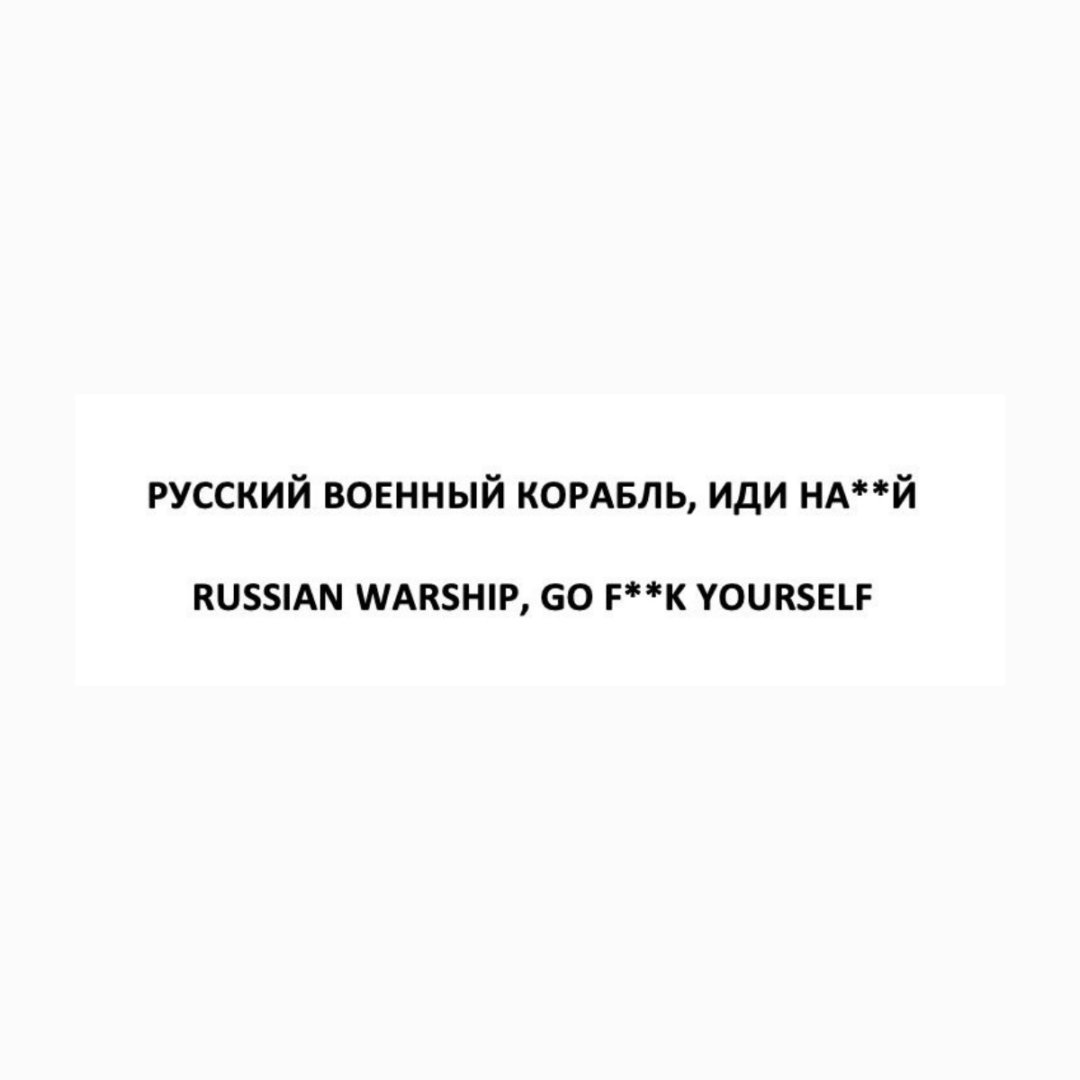
EUIPO had initially rejected the trademark under Article 7(1)(f) EUTMR for violating principles of morality, as it was deemed offensive, insulting, and exploitative of a tragic event. The Board of Appeal further ruled it lacked distinctive character under Article 7(1)(b) EUTMR.
The applicant (the Administration of the State Border Guard Service of Ukraine) applied for the mark at issue shortly after a Ukrainian soldier uttered the phrase in response to a demand by the Russian military to surrender during the February 2022 attack on Snake Island, in Ukraine’s territorial waters.
In its decision of November 13, 2024, the GC found that the phrase was used as a political slogan to promote bravery in the face of overwhelming odds and not to promote any trade or commercial entity, that is, as a source of commercial origin. While the GC clarified that the law does not automatically exclude political slogans from registration, it ruled that this specific mark could not function as a trademark as the relevant consumer would associate it solely with its political meaning not with any economic undertaking.
The GC deemed the fact that the phrase is well known internationally as a symbol of Ukraine’s fight against Russia to be irrelevant as the applicant did not rely on Article 7(3) EUTMR or had not claimed that the mark had acquired distinctiveness through the use made of it.
As the applied-for mark was refused registration under Article 7(1)(b) EUTMR, the GC did not need to examine the morality-based rejection under Article 7(1)(f).
This decision highlights the need for brand owners to always consider the strict requirements regarding distinctiveness, especially in the case of slogans, since to be considered a trademark, indicators of commercial origin must be perceived by the relevant public.
Although every effort has been made to verify the accuracy of this article, readers are urged to check independently on matters of specific concern or interest. Law & Practice updates are published without comment from INTA except where it has taken an official position.
© 2025 International Trademark Association

Contact us
Do you want consulting, advice or are interested in any of our legal services? Contact us and we will help you!